
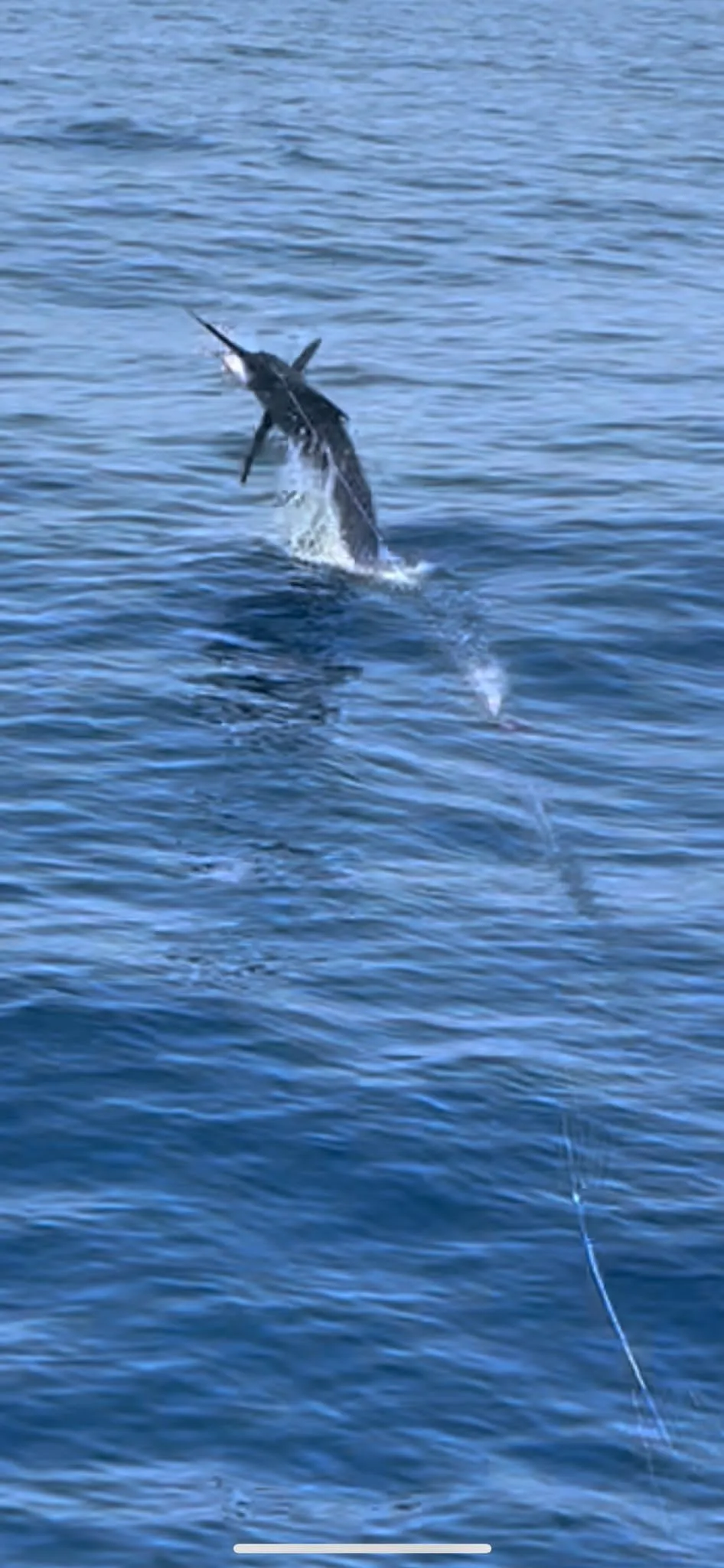
Blue marlin is the reason serious anglers fly to Tenerife. From mid-summer the warm Atlantic current pushes bait schools through the channel between Tenerife and La Gomera, and with them come blue marlin from 200 to 400+ kilograms — fish that turn a quiet afternoon into forty minutes of pure chaos on the reel.
Season: When to Come for Marlin
The realistic marlin window in Tenerife runs July to October, with August and September as the heart of the season. Water temperature holds above 24°C, the current lines are sharp, and the fish are feeding aggressively before the autumn migration. Outside these months a marlin is possible — but we won't sell you one. If your dates are fixed elsewhere in the year, look at tuna or wahoo instead.
How We Fish for Marlin
- Trolling a full spread: 4–6 lines with skirted lures and rigged baits, run off outriggers at 7–9 knots along temperature breaks and depth contours.
- Heavy tackle only: Shimano Tiagra 80W and 130W reels, custom Howk rods, professional fighting chair. A blue marlin on undersized gear is a dead marlin — we don't do it.
- The La Gomera channel: the most productive marlin water in the Canaries, reached on our full-day trips and the 3-day La Gomera safari aboard the flagship yacht Tanoa.
100% Tag & Release
Every billfish we raise — blue or white marlin — is fought, brought boat-side, photographed in the water, and released alive. No exceptions, no "just this one". It's the standard of every serious operation in the Atlantic, and the reason there are still marlin here to catch. Read more about our catch and release ethics.
Boats & Pricing
Marlin fishing is a full-day commitment: the fish hold offshore, and a 4-hour trip simply doesn't reach them properly. Book an 8-hour private charter from €1,000, or the multi-day safari from €2,200/day if you want to fish the channel at first light. The whole boat is yours — see how private charters work.
FAQ
What is the best month for marlin fishing in Tenerife?
August and September are peak. July and October are solid shoulder months. The rest of the year, marlin encounters are rare and we recommend targeting tuna or wahoo instead.
Can I keep a marlin I catch?
No. All billfish are tagged and released alive — it's our firm policy and standard practice across responsible Atlantic operators. You keep the photos, the video, and the story; the fish keeps swimming.
Do I need experience to fight a marlin?
No. The crew handles the strike and hands you the rod in the fighting chair, then coaches you through every pump and wind. Reasonable fitness helps — a big blue can take 30–60 minutes to land.