
The waters off Tenerife hold over 500 documented fish species, but a fishing charter targets a specific group — the pelagic predators and reef dwellers that make these waters one of the most productive fishing grounds in the eastern Atlantic. Blue marlin over 400 kg. Yellowfin tuna year-round. Wahoo at speeds exceeding 95 km/h. Dorado are so brightly coloured that they look artificial until you see one in the water.
What makes Tenerife different from most European fishing destinations is variety combined with accessibility. The Canary Current brings cold-water species south. Equatorial flows push warm-water species north. The island's steep underwater shelf drops to 2,000+ metres within minutes of Puerto Colon, concentrating both groups in a narrow, fishable corridor. On a single charter with Tenerife Fishing Experts, you might encounter Atlantic game fish that elsewhere would require separate trips to separate oceans.
The Big Game Species These are the trophy fish — the species that draw serious anglers to Tenerife from across Europe and beyond.
Blue Marlin (Makaira nigricans)
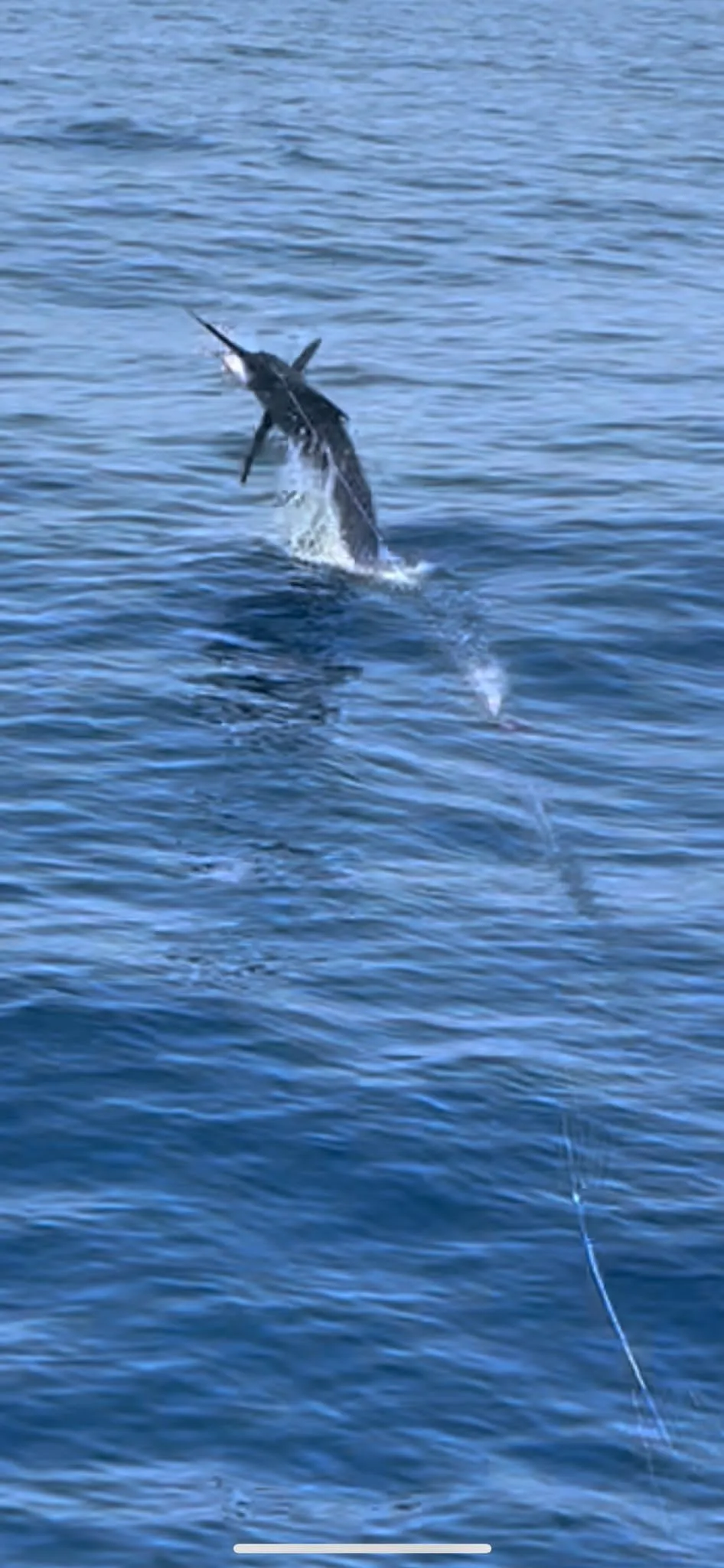
Identification: Cobalt blue dorsal surface, silver-white belly, prominent dorsal fin, long pointed bill. The largest billfish in the Atlantic. Unmistakable when it surfaces — no other fish in these waters combines the size, colour, and explosive aerial behaviour.
Size in Tenerife waters: Average hook-ups range from 80–250 kg. Fish over 400 kg are caught every season in the Canary Islands. The Atlantic record exceeds 600 kg, and Tenerife's deep-water shelf puts anglers in direct contact with that calibre of fish. Peak season: July through October, with September typically producing the highest catch rates. Present from late May through November. Occasional catches outside this window, but rare.
Technique: Trolling at 7–9 knots with large skirted lures or rigged ballyhoo. Blue marlin strike on the surface — the initial hit is visual and violent. The fight can last 30 minutes to over two hours, depending on fish size and angler experience.
Keep or release: All blue marlin caught on Tenerife Fishing Experts charters are tagged and released alive. Billfish conservation is non-negotiable — these are apex predators essential to the Atlantic ecosystem. On the Mikestrike, the crew handles leader work and hook removal at the boat for a clean release.
Best charter format: Full-day on the Mikestrike. Marlin require time — time to find temperature breaks, time to troll the spread, time to fight and release.
Full guide: Marlin fishing in Tenerife — season windows, tackle, and how tag & release works on the boat.
White Marlin (Kajikia albida)
Identification: Lighter colouration than blue marlin — more green-blue on top with rounded dorsal fin tips. Smaller and more slender. Distinguished from blue marlin by the rounded (not pointed) pectoral fins and smaller overall frame.
Size in Tenerife waters: Average 25–50 kg. Smaller than blue marlin, but pound-for-pound one of the most acrobatic fighters in the Atlantic — repeated jumps, tail-walks, sudden direction changes.
Peak season: June through October, overlapping with blue marlin season. Less frequently encountered than blues, making each catch notable.
Technique: Trolling with smaller skirted lures or live bait. White marlin tend to strike lighter tackle, which makes the fight more dynamic on appropriately matched equipment.
Keep or release: Tag and release only.
Yellowfin Tuna (Thunnus albacares)
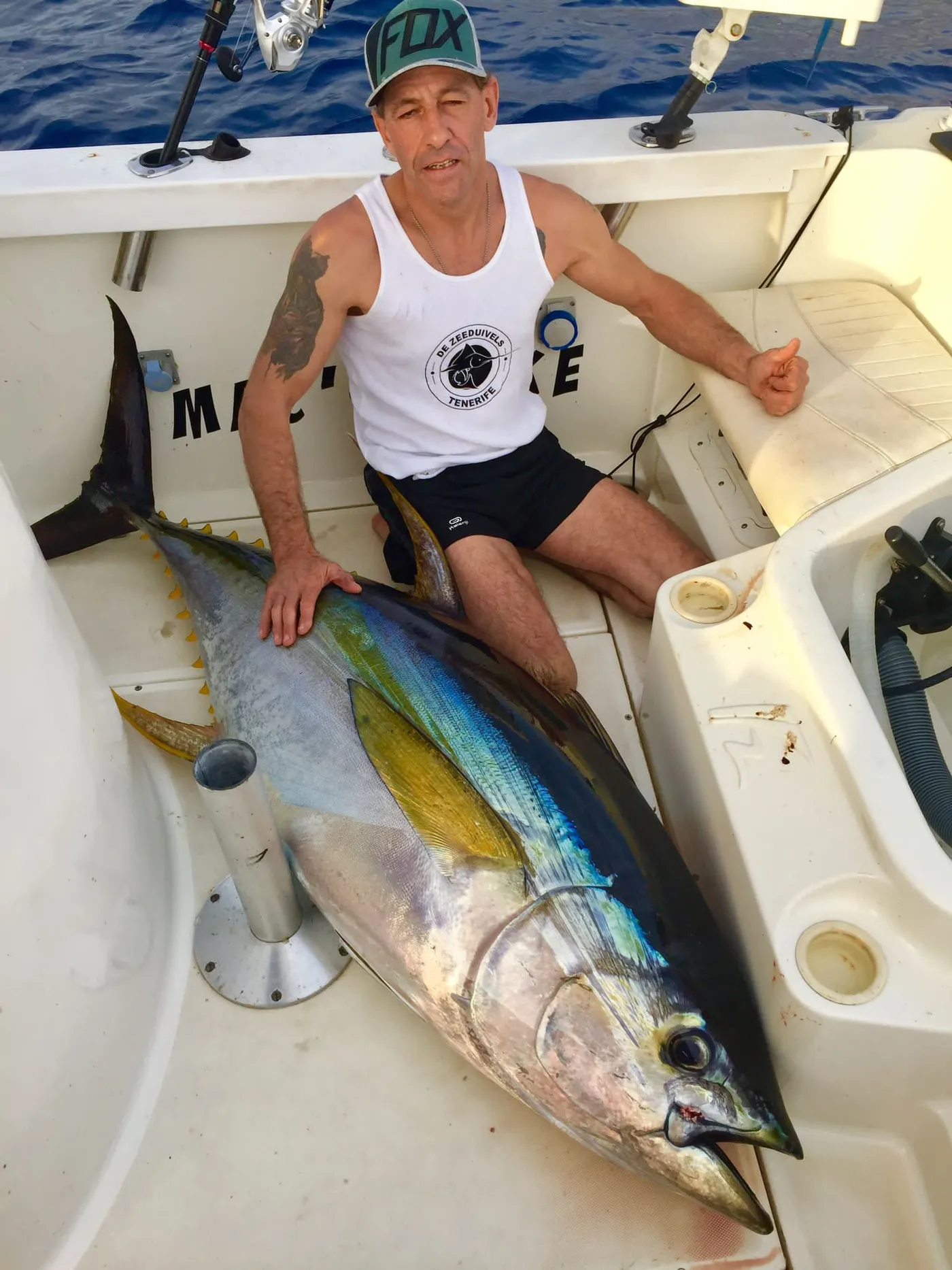
Identification: Dark blue-black dorsal surface, bright yellow finlets along the tail, distinctive long yellow dorsal and anal fins in mature fish. Torpedo-shaped body built for speed and sustained power. Fresh from the water, the yellow markings are vivid — they fade quickly after death, which is why photos taken immediately show the true colours.
Size in Tenerife waters: Most charter catches range from 5–30 kg. Fish in the 40–60 kg class appear regularly, and specimens over 80 kg are recorded seasonally. Even a "small" 10 kg yellowfin delivers a powerful, sustained fight. Peak season: Year-round — the most consistently available big game species off Tenerife. Larger fish tend to appear between spring and autumn when surface waters warm, and baitfish concentrate near the shelf edge.
Technique: Trolling with skirted lures or cedar plugs at 6–8 knots. Live bait (small mackerel, squid) when drifting over productive structure. Jigging in deeper water when the fish are holding at 50–100 metres. Yellowfin respond to multiple techniques, which is why they're the backbone of most charter catches.
Keep or release: Your choice. Yellowfin tuna is one of the finest eating fish in the ocean — deep red flesh, excellent raw (sashimi) or grilled. The crew cleans your catch, and restaurants near Puerto Colon will prepare it that evening.
Best charter format: Realistic on a 4-hour trip on the Barco 33 or via Shared Ticket Fishing. For targeting larger specimens, a half-day or full-day charter on No Limits One or No Limits Two covers more water and improves odds. Read our Fishing Tours main page for format comparison.
Full guide: Tuna fishing in Tenerife — yellowfin and bigeye month by month.
Bigeye Tuna (Thunnus obesus)
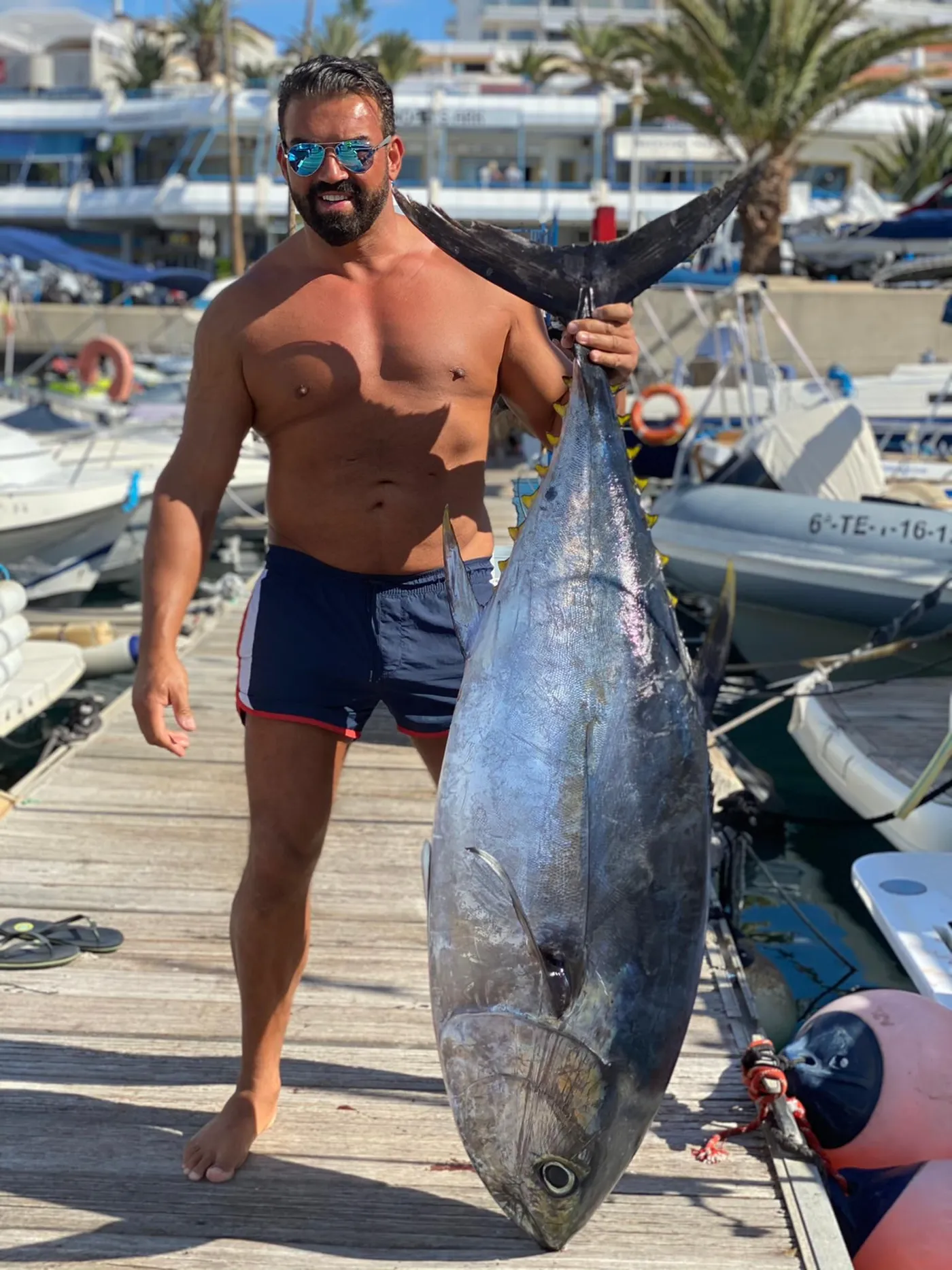
Identification: Similar body shape to yellowfin but with notably larger eyes (an adaptation for deep-water hunting), shorter pectoral fins, and a more rounded body profile. Less vivid colouration — darker overall, with less prominent yellow markings. In the hand, bigeye feels denser and rounder than yellowfin of equivalent length.
Size in Tenerife waters: Average 15–50 kg on charter catches, with fish over 100 kg recorded in Canary Islands waters. Bigeye grow larger than yellowfin and inhabit deeper, cooler water.
Peak season: November through March — the cooler months. Bigeye favour water temperatures below 20°C and spend daytime hours at 200–500 metres depth, rising toward the surface at dusk and dawn. Winter fishing off Tenerife targets bigeye as the primary tuna species.
Technique: Deep trolling, slow jigging at 100–200 metres, and dawn/dusk sessions when bigeye rise to feed. Targeting bigeye requires a captain who understands the thermal layers off the southern shelf — the fish follow specific temperature bands, not arbitrary locations.
Keep or release: Your choice. Bigeye tuna flesh is prized for sashimi — higher fat content than yellowfin, rich and buttery when fresh. Some of the most valuable sushi-grade tuna in the world.
Best charter format: Full-day on the Mikestrike or No Limits One during the winter months.
Wahoo (Acanthocybium solandri)
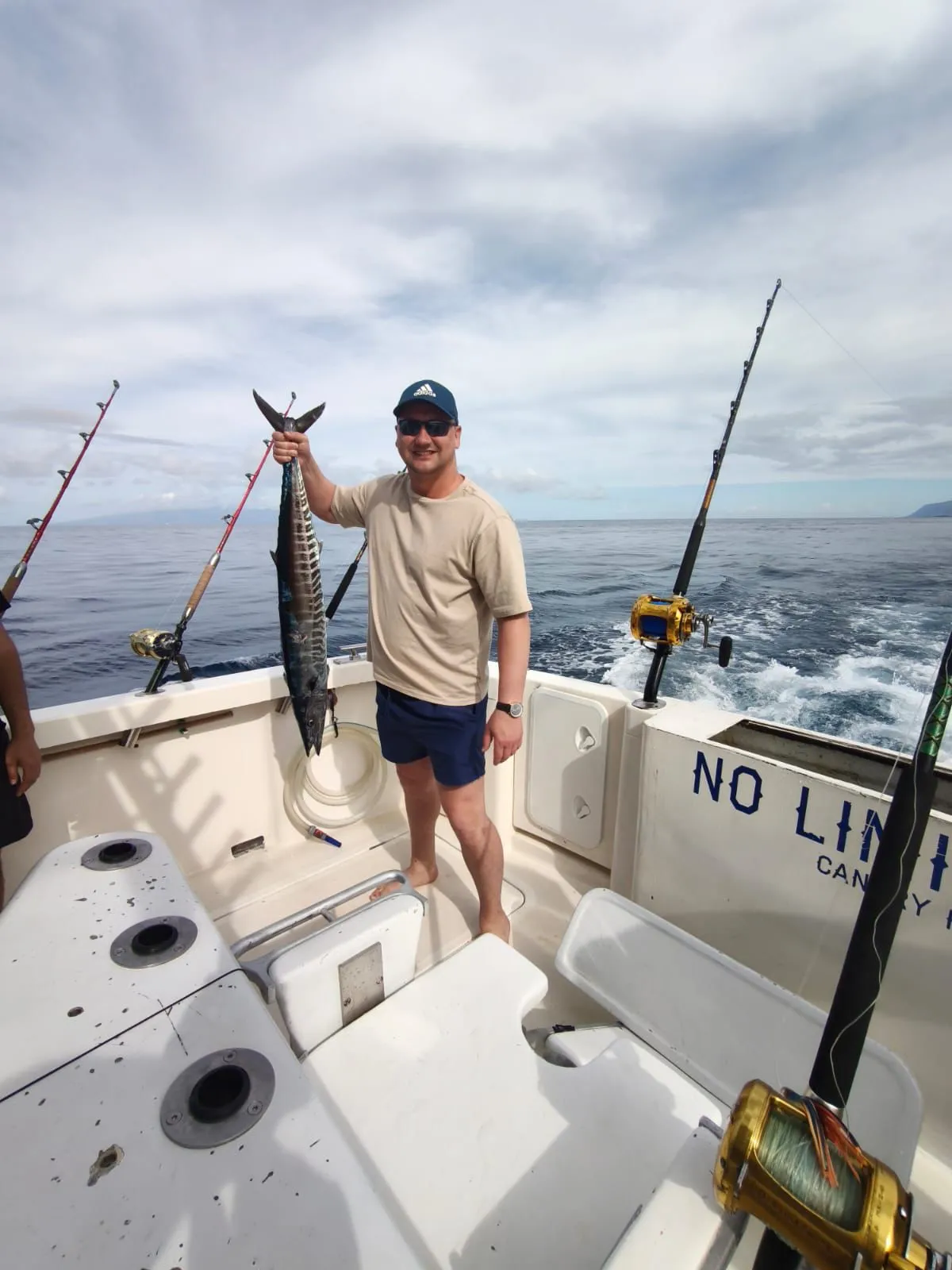
Identification: Long, slender, torpedo-shaped body. Iridescent blue-green back with distinctive dark vertical bars along the sides. Narrow, pointed snout. The body is built for one purpose — speed. Wahoo have been clocked at over 95 km/h, making them one of the fastest fish in the ocean.
Size in Tenerife waters: Most catches range from 8–20 kg. Fish over 30 kg are possible, and specimens approaching 50 kg have been recorded in Canary Islands waters.
Peak season: Late spring through autumn (May–October), though solitary wahoo are caught year-round. They follow warm currents and concentrate near temperature breaks and floating debris.
Technique: High-speed trolling at 10–15 knots with skirted lures or diving plugs. Wahoo strikes are sudden and violent — a screaming reel with zero warning. The initial run is one of the most explosive moments in fishing. Wire leader is essential because wahoo teeth cut monofilament instantly.
Keep or release: Your choice. Wahoo is excellent eating — firm white flesh, mild flavour, superb grilled or pan-seared. One of the most prized table fish among serious anglers.
Best charter format: Half-day on No Limits One or No Limits Two — wahoo respond well to targeted high-speed trolling, and these vessels suit the technique perfectly.
Full guide: Wahoo fishing in Tenerife — high-speed trolling, wire leaders, and peak months.
Dorado / Mahi Mahi (Coryphaena hippurus)
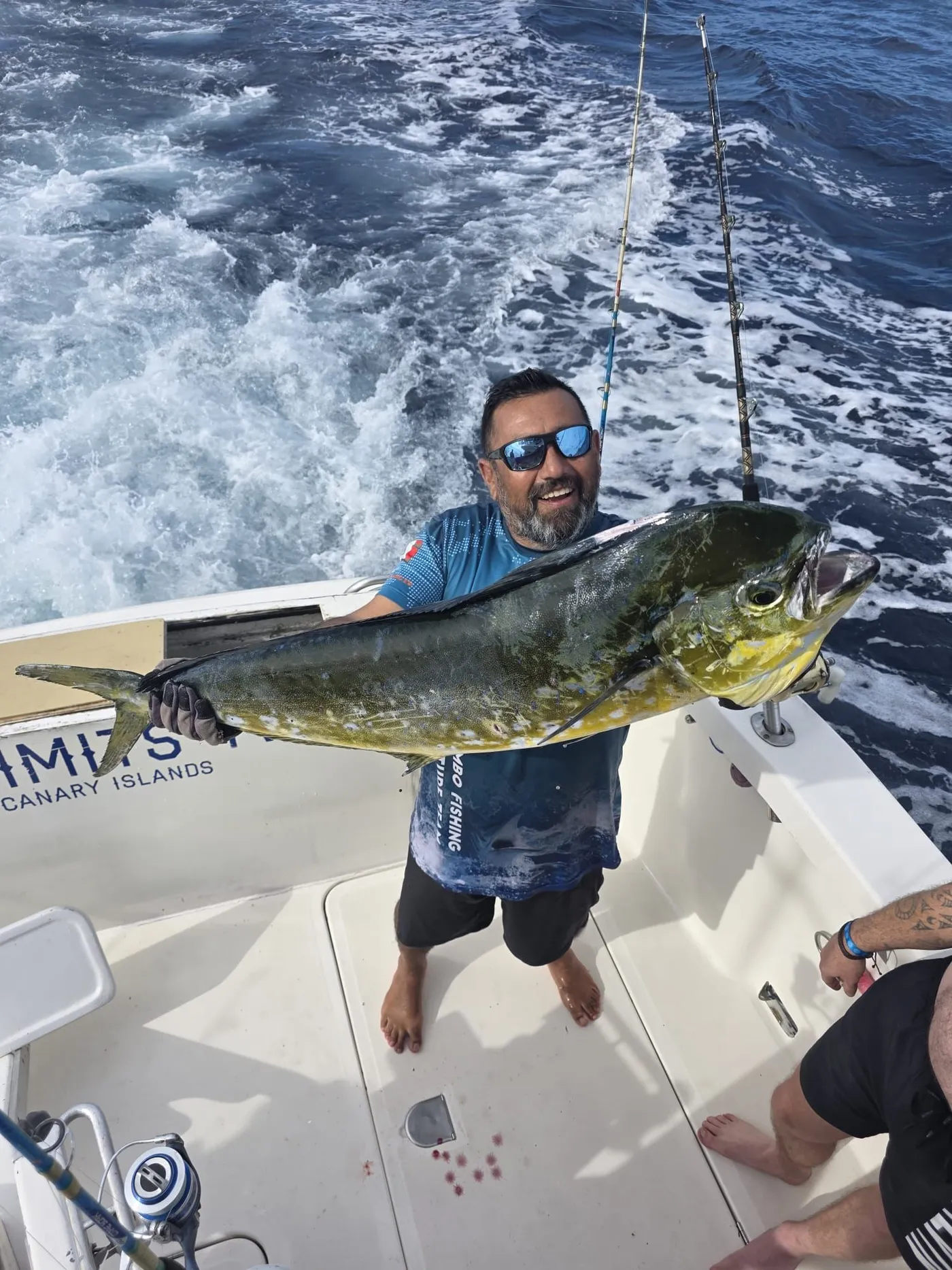
Identification: Impossible to mistake for anything else. Brilliant green-gold body with blue dorsal surface, scattered blue and gold spots, and a distinctive blunt forehead (especially prominent in males). Fresh from the water, dorado flash through a spectrum of colours — electric blue, neon green, gold — that fade within minutes after death. One of the most visually spectacular fish in the Atlantic.
Size in Tenerife waters: Average 3–10 kg. Mature males (bulls) reach 15–20 kg. Fish over 25 kg are exceptional but recorded.
Peak season: Spring through early winter (April–December). Dorado are warm-water fish that follow debris lines, floating objects, and current edges where bait concentrates.
Technique: Trolling with small skirted lures or live bait. Dorado are aggressive, curious feeders — they often follow a hooked fish to the boat, creating opportunities for multiple hook-ups. Light tackle makes the fight exciting: dorado are acrobatic, jumping repeatedly and running in unpredictable patterns.
Keep or release: Your choice. Dorado is an outstanding table fish — firm white flesh, versatile in the kitchen, excellent grilled, fried, or in ceviche. Among the best-eating fish you can catch off Tenerife.
Best charter format: Realistic on a 4-hour trip. Dorado regularly save the day when bigger species are not cooperating — abundant, willing, and a joy to catch.
Full guide: Dorado (mahi mahi) fishing in Tenerife — season, technique, and why it rescues slow days.
Reef and Bottom Species Not every fish on a Tenerife charter is pelagic. The volcanic reef structures and rocky bottom along the southern coast hold species that fight hard and eat well.
Amberjack (Seriola dumerili)
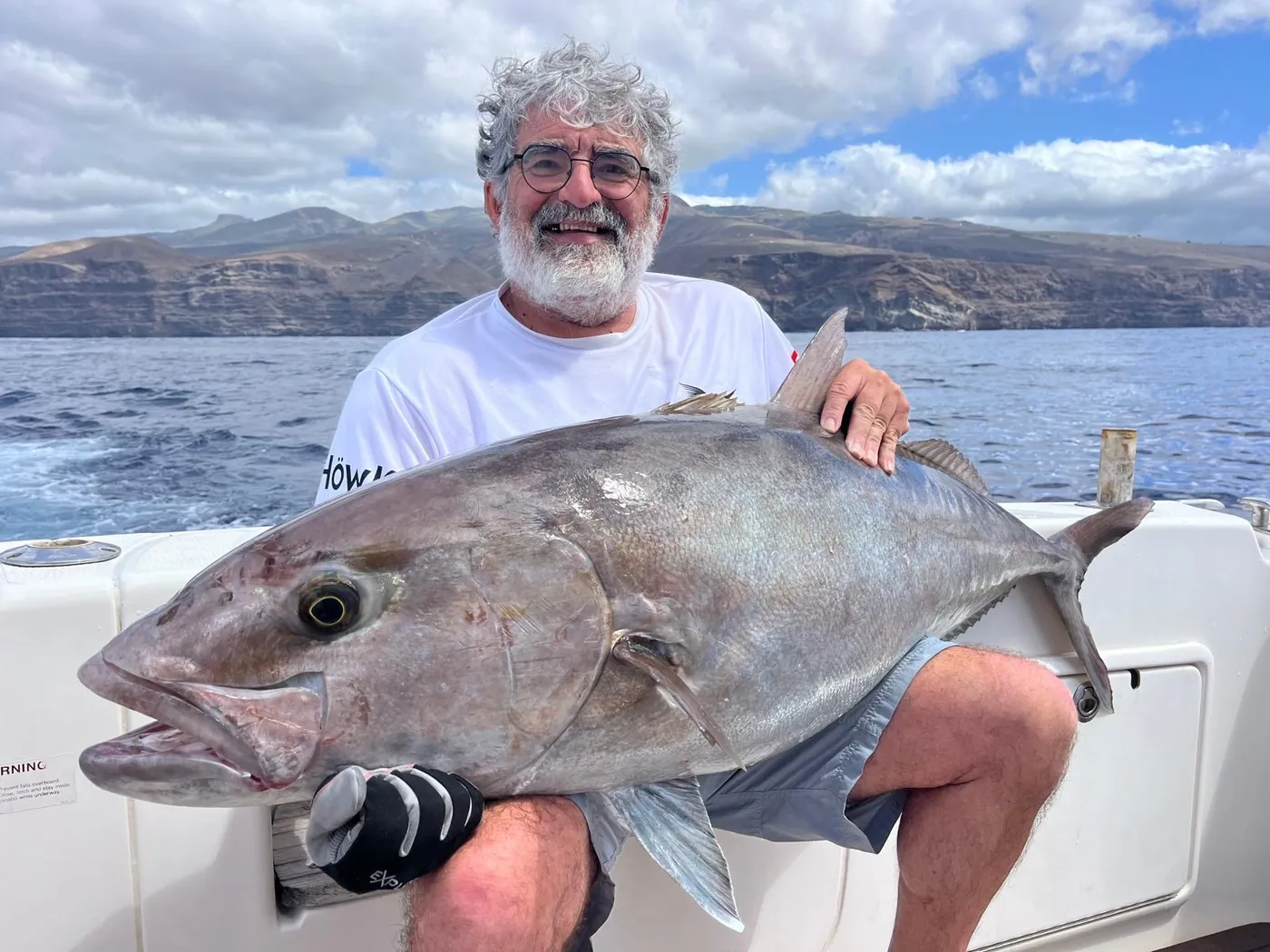
Powerful, deep-bodied reef predator. Olive-green to dark brown with a distinctive amber stripe from eye to tail. Average 5–15 kg on charter catches, with fish over 30 kg possible over deep reef structure. Amberjack fight dirty — they dive for the bottom the moment they're hooked, using structure to break the line. Jigging and live bait are the primary techniques. Available year-round, with peak activity in warmer months.
Full guide: Amberjack fishing in Tenerife — deep jigging over volcanic reef structure.
Barracuda (Sphyraena viridensis)
Long, silver, torpedo-shaped with prominent teeth. The Great Barracuda's smaller Atlantic cousin. Average 2–5 kg, with larger specimens over 8 kg. Barracuda are fast, aggressive, and visually dramatic — they often strike near the surface with explosive speed. Trolling and casting with artificial lures. Available year-round. Edible but not commonly kept for the table due to flavour.
Grouper (Epinephelus marginatus)
Heavy, thick-bodied reef dweller found around rocky structures and volcanic formations. Brown to olive-green with darker mottling. Smaller specimens (2–5 kg) are common on bottom fishing trips. Larger dusky grouper can exceed 20 kg. Bottom fishing with live bait or jigs. Protected in some areas — regulations vary, and the captain will advise on what can be kept.
Atlantic Bonito (Sarda sarda)
Smaller tuna relative — torpedo body, dark oblique stripes on the back. Average 1–4 kg. Bonito school near the surface and respond aggressively to trolling and casting. Fast, energetic fighters for their size. Excellent for beginners because they're abundant and willing. Edible but firmer and darker than yellowfin — better suited to grilling or smoking than raw preparation.
Full guide: Bonito and skipjack fishing in Tenerife — light tackle trips that suit families and first-timers.
Are There Sharks in Tenerife Waters?
Yes, but encounters on fishing charters are rare and not dangerous. The most common species in deeper waters include blue sharks and shortfin makos, both of which occasionally take trolling lures intended for tuna. Hammerhead sharks are present but extremely uncommon near shore.
Tenerife is not a shark-fishing destination, and Tenerife Fishing Experts does not target sharks. If a shark is hooked incidentally, it is released. There is no credible safety risk from sharks to swimmers or snorkellers in the charter areas off South Tenerife — the water depth and distance from feeding areas make encounters with bathers essentially zero.
Seasonal Quick-Reference Species Jan–Mar Apr–Jun Jul–Se Oct–Dec p
Blue Marlin — Arriving Peak Departing
White Marlin — Arriving Peak Departing
Yellowfin Tuna Good Good Good Good
Bigeye Tuna Peak Good — Peak
Wahoo Occasiona Arriving Peak Departing l
Dorado — Good Good Good
Amberjack Good Peak Good Good
Barracuda Good Good Good Good
For the full month-by-month breakdown including techniques and recommended trip formats, see our Tenerife Fishing Season Calendar.
Which Tenerife Fishing Experts Vessel for Which Species Barco 33 and Shared Ticket Fishing (4-hour and half-day trips):
Ideal for targeting yellowfin tuna, wahoo, dorado, and barracuda. The Barco 33 offers a versatile platform for mixed techniques — trolling and jigging on the same trip. Shared Ticket Fishing puts individual anglers on the same professional vessels at a per-person price. The go-to format when the goal is action and variety.
Mikestrike (full-day, big game):
The flagship fishing vessel. Full-day charters targeting blue marlin, bigeye tuna, and the larger yellowfin that hold over deep structure. Penn International and Shimano Tiagra reels, fighting chair, IGFA-rated line, and the range to reach distant productive water. For serious anglers who want the maximum chance at trophy fish.
No Limits One and No Limits Two (half-day to full-day):
Versatile offshore platforms covering everything from tuna hunts to extended big game expeditions. Professional-grade tackle, experienced captains, and the flexibility to adjust techniques throughout the day. For anglers who want dedicated fishing vessels with the range to work the full shelf.
The Art of Loving the Ocean, at Tenerife Fishing Experts, includes loving what lives in it. Every charter operates on sustainable principles — billfish are always released, catch limits are respected, and the crew treats these waters as a resource to protect, not just exploit.
Frequently Asked Questions About Fish Species in Tenerife What is the biggest fish you can catch off Tenerife?
Blue marlin. Fish over 400 kg are caught every season in the Canary Islands' waters. The Atlantic record exceeds 600 kg. Among non-billfish species, bigeye tuna over 100 kg are recorded seasonally.
Can you eat the fish you catch?
Most species — yes. Yellowfin tuna, bigeye tuna, dorado, wahoo, amberjack, and bonito are all excellent eating. The crew cleans your catch, and nearby restaurants will cook it. Billfish (marlin) are always released.
Are there fish available year-round?
Yes. Yellowfin tuna, barracuda, amberjack, and bonito are present every month. The species mix shifts seasonally — marlin and wahoo dominate summer, bigeye tuna peaks in winter — but there is no dead season for fishing off Tenerife.
Are there dangerous sharks in Tenerife waters?
Blue sharks and shortfin makos inhabit deeper water but rarely interact with charter fishing. There is no credible safety risk to swimmers or snorkellers in the charter areas off South Tenerife.
What is the rarest catch on a Tenerife fishing charter?
Swordfish are occasionally caught but extremely rare on daytime charters — they are deep-water nocturnal feeders, which is why they are targeted after dark (swordfish fishing guide). Orca sightings happen perhaps once a year — spectacular but unpredictable.
Do I need to know fish identification before booking?
No. The crew identifies every fish caught and explains the species, technique, and whether it can be kept. Part of the experience is learning what lives in these waters while you fish them.
Which species is best for beginners? Dorado and Atlantic bonito — abundant, aggressive feeders that strike willingly and fight energetically on light tackle. Both are realistic catches on a standard 4-hour trip, even for someone holding a rod for the first time.
Book a Fishing Charter with Tenerife Fishing Experts Blue marlin, yellowfin tuna, wahoo, dorado — the waters off South Tenerife hold Atlantic game fish within 20 minutes of Puerto Colon marina, year-round. Whether you want to target a specific species or discover what the ocean offers on the day, Tenerife Fishing Experts matches you with the right vessel, the right captain, and tackle prepared for what is swimming.